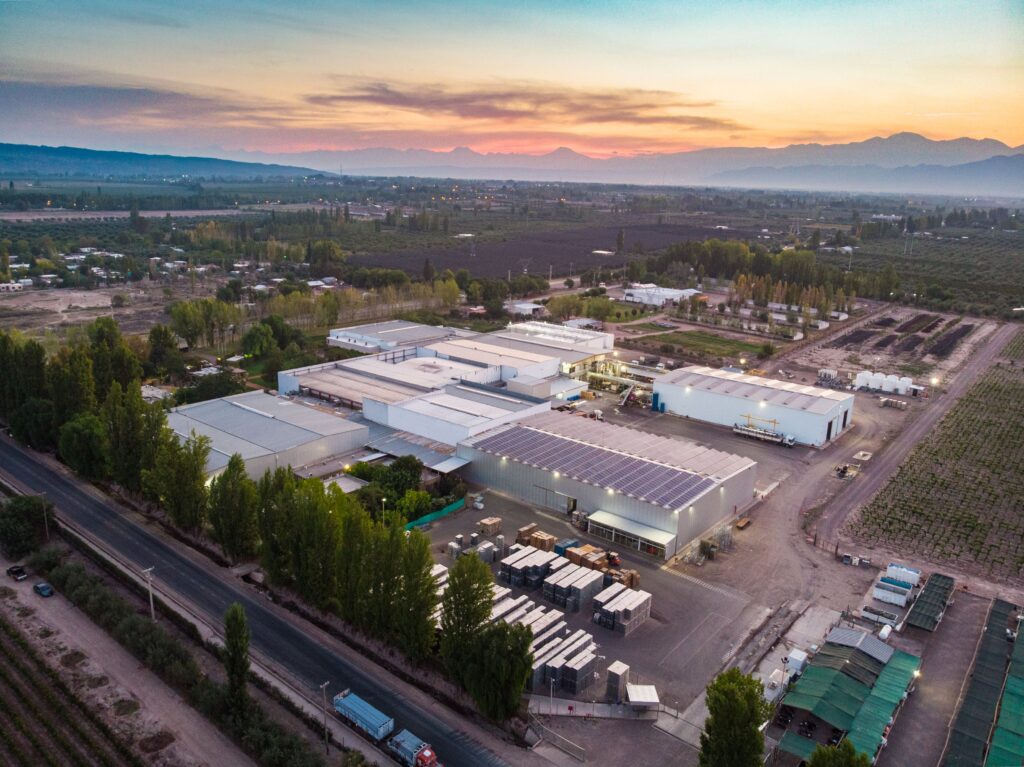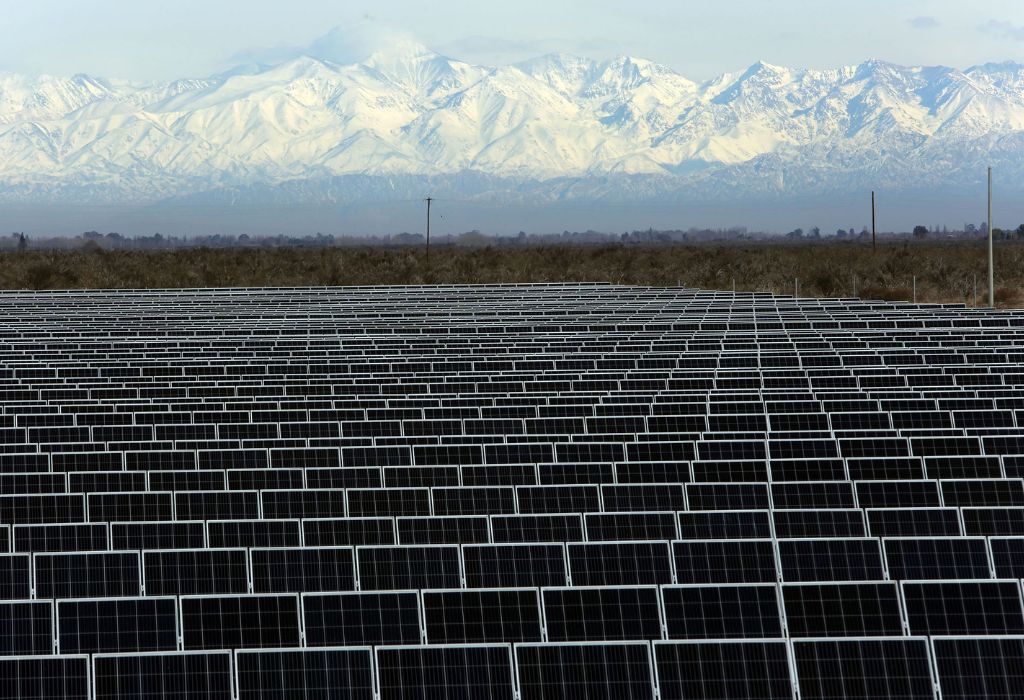
When it comes to solar energy in Argentina, Mendoza holds a unique and undisputed position. It is no coincidence that some of the country's largest and most successful photovoltaic installations are located in this province: the 6.6 MW Santa Rosa Solar Park, Bodega Trivento's 297 kW installation, and dozens of medium-scale industrial projects that together exceed 20 MW installed.
But Mendoza's leadership is not explained solely by the presence of installation companies like Energe. There are structural factors — physical, economic and regulatory — that make Cuyo the most attractive region in the country for large-scale industrial solar adoption. In this article we analyse them one by one.
The solar resource: the numbers that matter
Mendoza receives an average of 5.8–6.2 kWh/m²/day of global horizontal irradiation (GHI), according to data from Argentina's Renewable Energy Atlas (SERNAC-Ministry of Energy). To put that in perspective: Spain, a global reference in solar energy, averages 5.0 kWh/m²/day in its sunniest zones. Chile, the leader in solar investment in South America, records 6.0 kWh/m²/day in its northern region.
In practical terms, that resource translates into real production:
- 1 kWp installed in Mendoza generates approximately 1,740 kWh per year.
- 1 kWp installed in Buenos Aires generates approximately 1,380 kWh per year.
That 26% difference has a direct impact on return on investment: with the same electricity bill, the same system and the same panel prices, the payback in Mendoza is structurally shorter than in the Greater Buenos Aires area.
An industry with high-intensity energy demand
The combination of exceptional solar resource with high energy demand is the formula that makes Mendoza particularly competitive. The province's productive structure includes sectors with very high electricity consumption:
- Wine industry and wineries: the wine production process — from crushing and fermentation through refrigeration and bottling — demands energy in concentrated bursts during harvest season (February–March) and continuously for cold storage systems during the ageing months. A mid-sized winery can consume between 80,000 and 300,000 kWh per month.
- Manufacturing industry and the Maipú-Guaymallén corridor: the most active industrial park in the country's interior, with metallurgy, plastics, food and packaging companies demanding 200 to 800 kW of contracted capacity.
- Agro-industry and farms: precision irrigation, cold storage systems in packing facilities and pre-cooling tunnels have consumption profiles that overlap perfectly with solar generation (peak consumption in summer, when the sun shines most intensely).
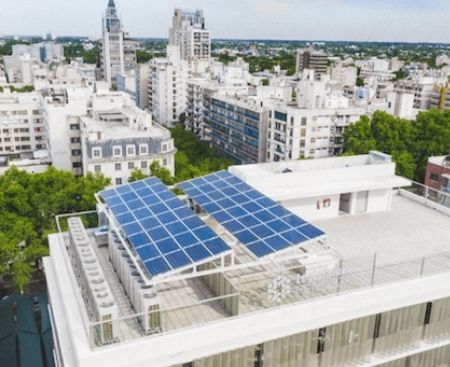
- Educational and public institutions: the Universidad Católica Argentina (Puerto Madero campus), the Provincial Legislature and hospitals in the public network have incorporated photovoltaic systems as part of their energy efficiency and environmental responsibility policies.
The provincial regulatory framework: agile and complete
Mendoza was one of the first provinces to join National Law 27.424 on Distributed Generation, through Provincial Law 9025. Distributors EDEMSA (Gran Mendoza and Valle de Uco) and EDESA (southern province) process connection applications in timeframes that average 45 to 60 days for industrial installations — one of the fastest in the country.
In addition, the province offers additional benefits for renewable energy projects under the Industrial Investment Law: income tax deferrals, reduced municipal fees in certain departments, and preferential access to the FODIS window (Fund for Distributed Renewable Energy Generation).
"In Mendoza, the combination of three factors — world-class irradiation, high-consumption industry and an agile regulatory framework — creates ideal conditions for photovoltaic projects with paybacks of 3 to 4 years and internal rates of return above 25% in dollars."
Landmark success stories in Mendoza
Energe's projects in Mendoza are the most concrete testimony to this potential:
| Project | Capacity | Panels | Impact |
|---|---|---|---|
| Santa Rosa Solar Park | 6.6 MW | 20,000 × 330W | Direct injection to MV grid |
| Bodega Trivento | 297 kW | 900 × 330W | 65% annual consumption covered |
| Finca Bautem | 71 kW | 216 × 330W | Rural bidirectional metering |
| Villavicencio Nature Reserve | 40 kW | 90 × 450W | Protected zone, 100% renewable |
| Provincial Legislature | 17.6 kW | 64 × 275W | Emblematic public building |
The demonstration effect and Mendoza's solar culture
One of the most interesting phenomena we observe in Mendoza is what we call the demonstration effect: when a company in the industrial corridor installs panels and its neighbours in the park see the bidirectional meter and hear the results at the next chamber meeting, adoption accelerates exponentially.
Today, in the industrial parks of Maipú, San Martín and Rivadavia, it is increasingly common to see warehouse rooftops covered with photovoltaic panels. This critical mass also facilitates access to local suppliers, engineers and specialised financing in the region.
Why choose an installer rooted in Mendoza?
Working with a company born and based in Mendoza — with national presence — brings concrete advantages: deep knowledge of EDEMSA/EDESA regulations, experience with local climate conditions (Zonda wind, hail, snow in high-altitude zones), established relationships with distributor inspectors, and fast response capacity for maintenance and post-installation warranties.
Energe has been installing photovoltaic systems in Mendoza and across the country for more than 19 years. Every project is managed by in-house engineers, from technical assessment through commissioning and real-time remote monitoring.
Conclusion
Mendoza leads in solar energy not by chance but because physics, economics and the regulatory framework align in a unique way. If your company has operations in the province or the Cuyo region, you are sitting on one of the planet's best solar resources with all the infrastructure to harness it.
The first step — a free energy diagnostic — lets you know in 48 hours the exact potential of your installation, the optimal system size and the investment recovery timeline.