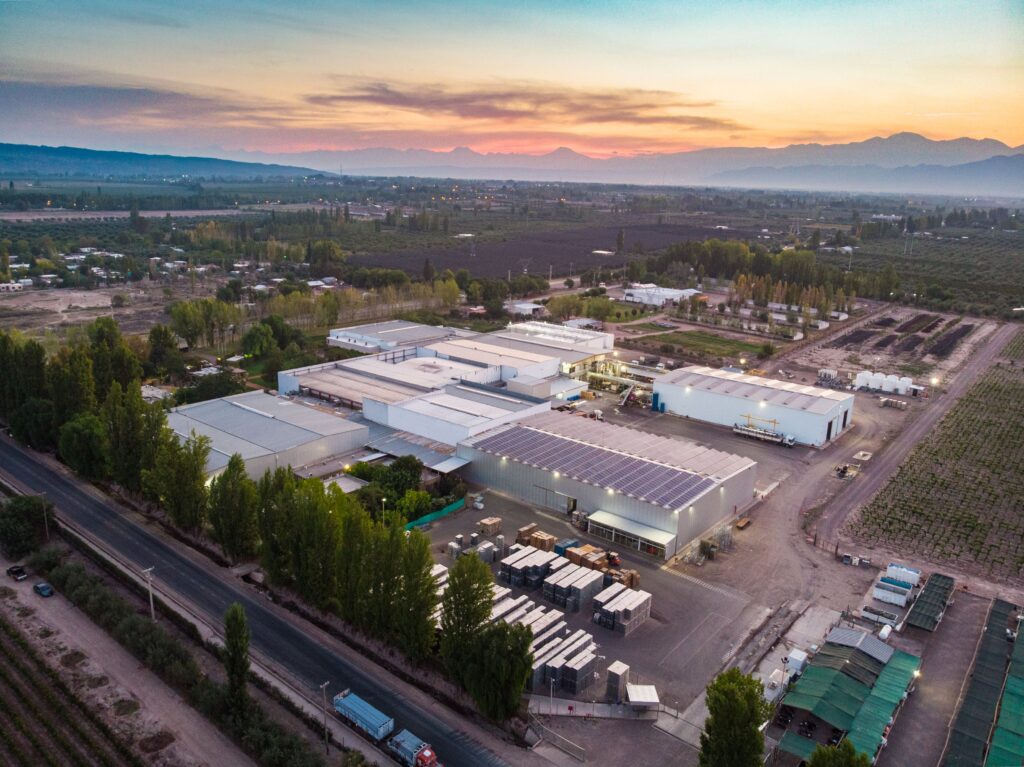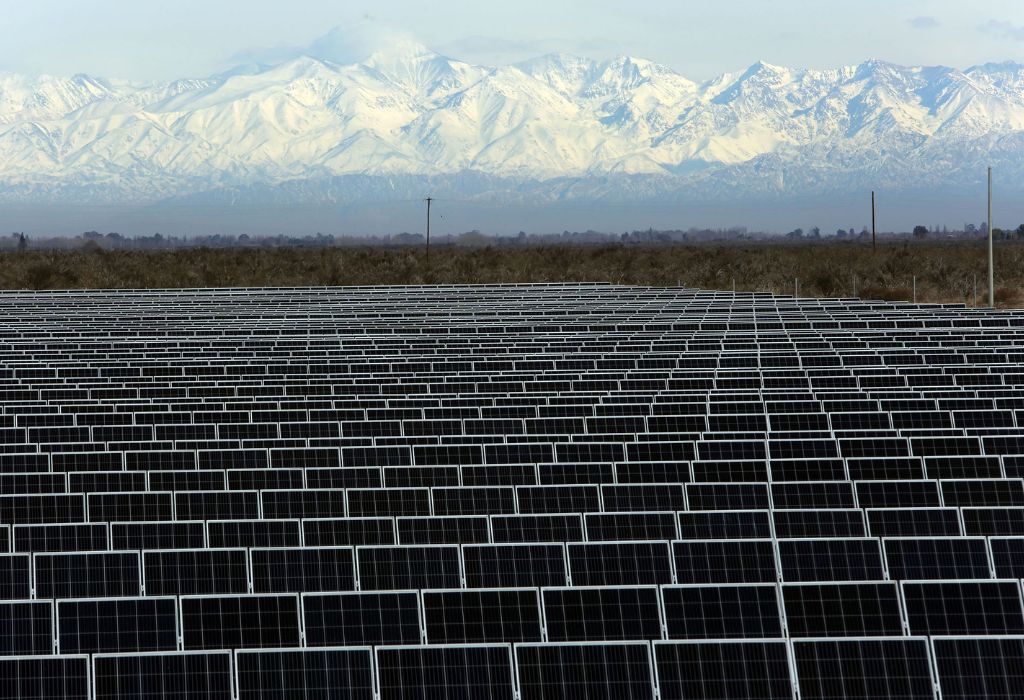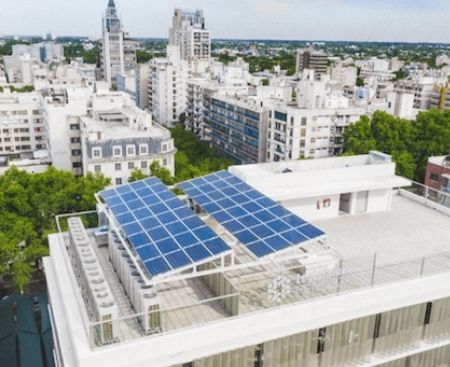
The Law 27.424 on Distributed Renewable Energy Generation, passed in 2017 and regulated by Decree 986/2018, fundamentally transformed Argentina's energy landscape. For the first time in history, businesses, industries, commerce and institutions can generate their own electricity through photovoltaic solar panels and, when they produce more than they consume, inject those surpluses into the public grid and receive a credit on their next bill.
This mechanism — known internationally as net metering — democratised access to renewable generation and opened an unprecedented savings window for the Argentine industrial sector. In this article we explain what the law establishes, who can join, what the concrete benefits are and how it operates in each province.
What is distributed generation?
Distributed generation refers to the model in which the end user — a factory, a business, a public institution — installs its own electricity generation system connected to the distribution grid. Unlike the traditional model, where only large power plants generate electricity and distribute it unidirectionally, here each consumption point can also be a production point.
The term prosumer (producer + consumer) defines exactly this new role: the user who not only consumes electricity from the grid but also generates it and contributes to the system when they have surpluses, receiving economic compensation in return.
What does Law 27.424 establish?
The key points of the regulation are:
- Net energy metering: kWh injected into the grid are deducted from the next billing period's consumption. If over 12 consecutive months accumulated production exceeds consumption, the positive balance is paid in cash at the wholesale energy value.
- Maximum permitted capacity: the installation cannot exceed the equivalent of 100% of the user's average demand over the last 12 months. This limit ensures the system is sized for self-consumption and not as a commercial power plant.
- Bidirectional metering: the local distribution company is required to install a smart meter that records both consumption and energy injected.
- Non-discriminatory access: no distributor can deny connection to a user who meets the established technical requirements. This point was fundamental to eliminating arbitrary barriers.
- FODIS: the Fund for Distributed Renewable Energy Generation provides preferential financing for residential, commercial and industrial projects.
Which provinces have joined the law?
Law 27.424 is national, but requires provincial adhesion for each jurisdiction to put it into operation. As of early 2025, more than 20 provinces have active operating frameworks. Among the most relevant for the industrial sector:
- Mendoza — Provincial Law 9025, distributor EDEMSA/EDESA, average processing time: 60 days.
- Buenos Aires — ENRE Resolution, distributor EDENOR/EDESUR, processing time: 45–90 days.
- Córdoba — Law 10604, distributor EPEC, processing time: 60–75 days.
- Santa Fe — Law 13.811, EPE and private distributors, processing time: 45–60 days.
- Neuquén — Joined, distributor EPEN, processing time: 30–60 days (one of the fastest in the country).
"Every month without solar installation is a concrete opportunity cost. Industrial electricity rates have risen more than 400% over the past two years. The savings from a photovoltaic system grow at the same pace as the tariff."
Concrete benefits for industry
For a company with a monthly demand of 50,000 kWh — equivalent to a medium-scale plant — a 400 kWp photovoltaic system installed in a high-irradiation zone such as Mendoza or San Juan can cover between 70% and 90% of annual consumption. The benefits go beyond bill savings:
- Direct reduction of variable energy production costs
- Structural protection against tariff inflation
- Access to sustainability certifications (ESG, ISO 50001, GRI)
- Improvement in EBITDA and cost per tonne/processed product
- Competitive differentiation with international clients and partners
Basic technical requirements to join
The photovoltaic system must meet certain requirements to be legally connected to the grid:
- Certified inverter to IEC 62116 standard or national equivalent (IRAM), with active anti-islanding protection.
- Grounding per Argentine Electrotechnical Association (AEA) regulations.
- Interface protections: the system disconnects automatically during a grid outage or fluctuation.
- Electrical plans signed by a licensed professional (electrical or electromechanical engineer).
- Certified installer: the executing company must be registered with the relevant provincial authority.
The processing time, from document submission to approval and commissioning, averages between 45 and 90 days depending on the province and local distributor.
The role of the certified installer
The law is clear: not just any company can perform connections under the distributed generation scheme. The installer must be registered and certified with the corresponding provincial authority, ensuring compliance with all electrical safety and technical documentation requirements.
Energe holds active certifications in all provinces where we operate, along with more than 19 years of experience in industrial photovoltaic installations and the capacity to manage the full process with the distributor from start to finish.
Conclusion
Law 27.424 is not just a benefit: it is the legal framework that makes solar energy investment profitable, safe and formalised for any Argentine industry. With tariffs rising steadily, the economic analysis is favourable in practically all provinces that have joined.
If you want to know exactly how much your company could save — with your current electricity bill figures and the irradiation data for your location — the first step is a free energy diagnostic.